In Portland's Old Houses, the Inspection Isn't What Stops the Sale
October 1, 2026
October 1, 2026
A buyer makes an offer on a two-family up on Munjoy Hill, built sometime before the first World War, walls thick with plaster, trim intact, the kind of house that photographs well and shows even better in person. The inspection comes back with the usual list for a house that age: an aging roof, some moisture in the basement, a few outlets that don't test right. Nothing that kills the deal. Then the buyer calls an insurance agent to bind a policy before closing, and the agent asks one question that stops the transaction cold: is there still active knob-and-tube wiring in the walls?
That question, not the inspection report, is where a lot of older Portland-area sales actually get decided.
Home inspectors in Maine have gotten more attention lately for a good reason. During the tightest years of the pandemic market, waived inspections became common across the state as buyers competed for scarce listings. As inventory has loosened, Maine inspectors have told the Bangor Daily News that buyers are going back to completing them, with Dan Smart, an inspector at Bangor-based Affordable Home, describing the inspection as an evaluation rather than a pass-or-fail test.
That framing is correct, and it's also where the confusion starts. An inspection is a snapshot of condition. It tells a buyer what's wrong. It does not tell them whether the house is insurable, and in Portland's pre-1940 housing stock, insurability is the harder question. A lender will not close without proof of a homeowners policy in place, and a growing number of standard carriers will not write a new policy on a home with active knob-and-tube wiring at all. So the sequence that actually determines whether a deal survives looks less like "inspect, then close" and more like "inspect, then get a wiring assessment, then find out if anyone will insure it."
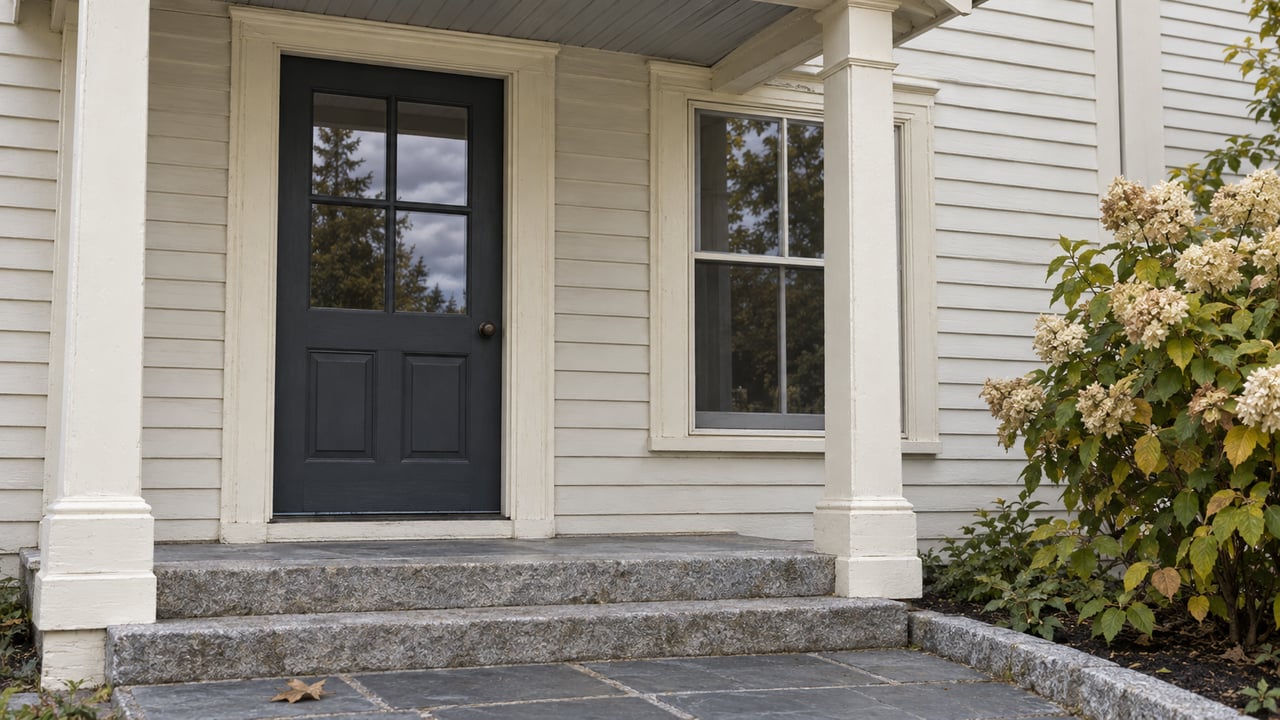
Knob-and-tube wiring was standard practice from roughly the 1880s through the 1930s, which puts it squarely in the era of the houses that give Portland's West End, Munjoy Hill, and the streets near the Eastern Promenade their character. A Portland electrical contractor explains that a home built before 1940 has a good chance of still carrying some of it, and that outdated wiring can delay a closing or reduce a sale price even when it's not causing any active problem.
The system itself isn't automatically dangerous. It has no ground wire, its original cloth insulation becomes brittle with age, and it was designed for a household running lights, not one running a refrigerator, a dishwasher, a modern HVAC system, and a couple of space heaters at once. Underwriters treat it as a fire-risk category rather than a case-by-case judgment call, which is why the fix matters more than the diagnosis.
Not every fix satisfies an insurer. A panel upgrade alone doesn't address wiring further down the circuit. A partial rewire can clear one room while active knob-and-tube remains in the attic or basement. Here's roughly what each option costs in Southern Maine and what it typically resolves:
| Scope of work | Typical cost, Southern Maine, 2026 | Usually satisfies underwriting? |
|---|---|---|
| Panel upgrade only | $2,000–$5,000 | No, if active knob-and-tube remains elsewhere |
| Partial rewire (a room or a few circuits) | $3,000–$12,000 | Sometimes, only if all active runs are addressed |
| Full rewire | $15,000–$35,000 or more | Yes, in most cases |
Downeast Electrical Services also points to a Maine-filed State Farm underwriting guideline that lists knob-and-tube as unacceptable for certain homeowners risks, and notes that replacing a panel by itself may not satisfy an insurer if active knob-and-tube wiring is still live in the home. That's the gap that catches people off guard under contract: they budget for the visible fix and discover the underwriter wanted the whole system addressed.
Munjoy Hill's own historic district status is a useful example of how much gets assumed rather than checked. The Portland City Council voted down a proposed Munjoy Hill Historic District in February 2021 on a 5-4 vote, with councilors citing concerns about affordability and impact on working-class residents. The council later reversed course on reconsideration and approved it.
Sellers and buyers routinely assume a historic designation means higher taxes or harder-to-get insurance. Portland's own tax assessor has said otherwise. Greater Portland Landmarks quotes City Tax Assessor Chris Huff confirming that "historic designation is not a factor included in property valuation," and that a historic district carries no separate property tax impact. The wiring question is unrelated to the district question entirely. A house can sit inside the Munjoy Hill Historic District or the older Eastern Promenade Historic Landscape District and still have perfectly modern electrical, or sit outside either boundary and still have live knob-and-tube in the attic. Confusing the two costs sellers a clean answer when a buyer asks about it directly.
This is worth raising now specifically because the market has shifted enough to give buyers room to act on what they find. Statewide, Maine had 6,258 active listings in August 2026, up 20 percent from a year earlier and the most since December 2019. Cumberland County's median single-family sale price held close to flat for the three months of June through August 2026, at $621,500. Homes in Portland were still selling with multiple offers and some waived contingencies over that stretch, typically going pending within about a month, but a buyer with other options is a buyer who can afford to ask an insurance agent a question before removing contingencies rather than after.
Portland sellers face their own new number this year. For fiscal year 2026-27, the city's tax rate rose to $12.58 per $1,000 of assessed value, up from $11.98, following the city's 2025 revaluation that pushed assessments toward market value. A seller pricing an older home into a market with more competition and a higher carrying cost for the next owner has less margin to absorb a surprise electrical bill discovered after an accepted offer.
The practical fix is sequencing. Address the wiring question before a buyer's inspector finds it, not after.
None of this requires a full rewire before listing. It requires knowing the answer before a buyer's insurance agent asks the question you can't answer at the closing table.
Does active knob-and-tube have to be fully replaced before closing? Not always, but a partial fix only works if it removes every active run, not just the visible one. An electrician's written scope, not a verbal assurance, is what satisfies most lenders.
Will living in a historic district make the home harder to insure? The district designation itself doesn't drive that risk. The age and condition of the wiring, plumbing, and heating system do, and those exist independent of any district boundary.
What else from this era should I expect a buyer to raise? Oil tanks and radon come up often in Maine's older housing stock. More than half the state's occupied homes still heat with oil, and Maine's disclosure statement asks specifically about tank age and service history. Radon testing by an independent registered tester is required when a house is listed for sale, and Maine's own health data puts the statewide rate of homes testing positive at 25 percent or higher.
An older home's wiring is not a defect to hide from. It's a fact to know before someone else finds it for you. If you're weighing when to list a historic Portland-area property, or you're under contract and want a second read on what an inspection report is actually telling you, Adrianne Zahner has spent two decades on the legal side of exactly these closings before ever writing an offer.
Stay up to date on the latest real estate trends.
Whether you’re buying your first home, upgrading to something new, or selling a beloved property, I’m here to provide expert guidance, clear communication, and thoughtful advocacy. I’m ready to help you take the next step.
Adrianne Zahner
Legacy Properties Sotheby’s International Realty 40 Main St Damariscotta ME 04543