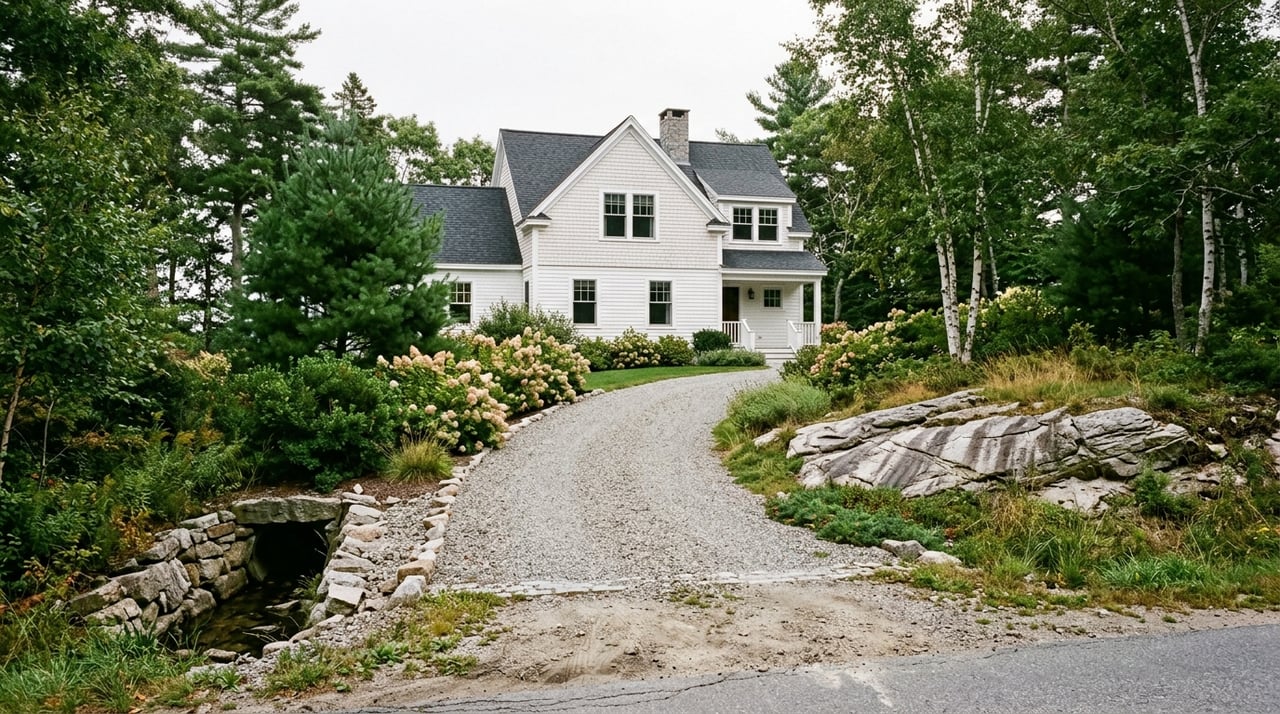
Buying Land in Camden & Rockport: Local Due Diligence
May 7, 2026
May 7, 2026
Wondering whether a beautiful parcel in Camden or Rockport is truly buildable? That question matters more than the listing photos, because with land, the real story is often in the zoning map, the road access, and the utility details. If you are considering a coastal lot, a wooded parcel, or acreage for a future home, understanding a few local rules early can save you time, money, and stress. Let’s dive in.
In both Camden and Rockport, the official zoning map is the controlling document for a parcel’s zoning status. That means you should not rely on a listing description, tax record, or general map screenshot when deciding what a lot may allow.
In Camden, the ordinance says the official zoning map is kept by the code enforcement officer and is the final authority on zoning status. In Rockport, the current land use ordinance also treats the official zoning map as the final authority. If you are evaluating a parcel, one of the first steps is to ask the local code office to confirm the exact zoning district and any overlay districts that apply.
Shoreland zoning is especially important in this part of Midcoast Maine. Both towns apply shoreland rules broadly, including land within 250 feet of great ponds, rivers, saltwater bodies, and coastal or freshwater wetlands, plus land within 75 feet of streams.
That can affect much more than just a waterfront lot. A parcel near a stream, wetland, or coastal edge may have setback, clearing, or design limits that shape where you can place a home, driveway, or other improvements.
In Camden, the ordinance notes that shoreland areas are mapped in the code enforcement office. In Rockport, the current ordinance also includes district-specific restrictions in resource protection and watershed overlays. For buyers, the practical takeaway is simple: verify shoreland status before you spend time designing a home plan around assumptions.
A parcel can look straightforward on paper and still come with access issues that affect cost and long-term use. In both Camden and Rockport, it is important to know whether the lot is served by a public road or a private way.
In Camden, private ways are not the town’s maintenance responsibility. The recorded plan must state that the town is not responsible for maintenance, repair, plowing, or sanding, and additional lot divisions using the private way require prior Planning Board approval.
Camden also sets minimum construction standards for private ways. These include a 10-foot roadway width, a 30-foot right-of-way, a 12-inch subbase, a 2-inch wearing surface, a minimum 0.5% grade, a maximum 10% grade, and 14 feet of vertical clearance. Site-distance review is also required at the public-way intersection.
Rockport takes a similar approach and is even more explicit about what it takes for a private road to become a town road. Its Municipal Road Acceptance Ordinance requires a formal application, title opinion, survey, and a two-year warranty, and the Select Board considers public safety and maintenance impacts before accepting a road.
Rockport’s subdivision ordinance also requires a written maintenance agreement for private roads. It sets standards that include turnouts every 500 feet, 14 feet of vertical clearance, a 10-foot roadway minimum, a 30-foot right-of-way, a minimum 0.5% grade, a maximum 10% grade, and protection from seasonal flooding or washout.
If a lot depends on a private road, ask for the maintenance agreement and confirm who handles plowing, sanding, grading, and repairs. That is not a minor detail. It affects your ongoing costs, your winter access, and your confidence in the property over time.
In Camden and Rockport, land shape matters. A steep slope or visible ledge may be part of a parcel’s appeal, but it can also limit where a home, driveway, well, and septic system can go.
Camden requires soils reports for uses that need subsurface wastewater disposal. Those reports must address soil conditions, groundwater, ledge, drainage, and other site factors, and they must include recommendations to offset site limitations where needed.
Rockport’s subdivision ordinance similarly requires evidence from a Maine licensed site evaluator. Test pits must show that enough suitable area exists for a system, and lot layouts must be able to accommodate wells, disposal areas, and reserve areas in compliance with state rules.
Rockport also requires major subdivision plans to identify sustained slopes greater than 25% over more than one acre. That is a reminder that topography is not just a design issue. It is a feasibility issue.
Both towns’ shoreland road and driveway standards also affect steep sites. Road and driveway banks may not be steeper than 2:1, and grades generally may not exceed 10% except for short segments.
In practice, a sloped or ledgy lot may still be buildable, but the usable building area can become smaller and more complex to plan. That is why it makes sense to order a survey and site evaluation early if the lot has any obvious topographic challenges or any uncertainty about septic placement.
Utility assumptions can create expensive surprises. In Camden and Rockport, you should confirm water and sewer availability directly for the parcel instead of assuming that nearby service means your lot can connect easily.
Camden’s 2017 comprehensive plan says the Maine Water Company’s Camden and Rockland division provides the town’s public water supply, but that service mainly covers the village area and does not extend across the rural parts of town. The plan estimates that about half of Camden’s population is served through roughly 1,800 service connections.
The same plan says Camden’s wastewater department operates the sanitary collection and treatment system. It also notes that access to sewer and three-phase power is not widespread in town. For a rural parcel, that can be very relevant to both project cost and design.
In Rockport, current town finance information says wastewater bills are issued by Maine Water Company. The town’s subdivision ordinance requires a sewer-district capacity letter when a subdivision will connect to public sewer.
Where public sewage service is not available, Rockport requires a private subsurface wastewater disposal system or private treatment facility. For water service, Rockport’s subdivision rules require connection to the public system in areas designated for future public water service, while areas outside those zones may rely on individual wells or Aqua Maine.
Rockport’s current comprehensive plan materials also note that no significant aquifers can supply the town as a whole and that roughly two-thirds of residents use groundwater wells. That makes early well-feasibility research especially important when you are considering land outside public service areas.
Maine Water’s Camden/Rockland division serves both Camden and Rockport, and its Rockport treatment facility serves Rockport, Camden, and nearby Midcoast communities. At the same time, Rockport is actively working on wastewater infrastructure and sewer-expansion planning, so utility status should still be confirmed lot by lot.
If you are serious about buying land in Camden or Rockport, these are the questions worth answering before you commit:
Land purchases often look simpler than existing-home purchases, but they can involve more moving parts. A parcel may be attractive, well located, and legally listed for sale, yet still require careful review to determine whether it can practically support access, water, wastewater, and a compliant building envelope.
That is where calm, local guidance can make a real difference. When you ask the right questions early, you can evaluate a parcel with more clarity and move forward with fewer surprises.
If you are considering land in Camden or Rockport, working with an advisor who understands how these local details fit together can help you make a more confident decision. To talk through a parcel, due diligence questions, or your broader Midcoast search, connect with Adrianne Zahner.
Stay up to date on the latest real estate trends.

Whether you’re buying your first home, upgrading to something new, or selling a beloved property, I’m here to provide expert guidance, clear communication, and thoughtful advocacy. I’m ready to help you take the next step.
Adrianne Zahner
Legacy Properties Sotheby’s International Realty 40 Main St Damariscotta ME 04543